The UPU is pleased to announce the theme of the 55th edition of the International Letter-Writing Competition for Young People, which will take place in 2026.
The deadline for submissions has now closed.
Write a letter to a friend about why human connection matters in a digital world.
This year, the UPU is partnering with the World Health Organization (WHO) and the United Nations Educational, Scientific and Cultural Organization (UNESCO) to inspire young writers worldwide to reflect on why human connection matters in an increasingly digital world and to share these reflections in a letter to a friend.
Since 1971, the UPU has encouraged young writers aged 9-15 years (inclusive) to write letters on a given theme for a chance to win exciting prizes. The competition is an excellent way of making young people aware of the important role that postal services play in our societies. It develops their composition skills and ability to express their thoughts clearly. It also fosters enjoyment of letter writing and helps to strengthen the bonds of international friendship.
Every year, the UPU’s secretariat – the International Bureau – chooses and publicizes a theme. Participating countries then organize the competition at national level through the Post, often with the support of the educational authorities and media, presenting one winning letter to the international jury convened by the UPU. Entries must reach the UPU International Bureau no later than 5 May each year. The jury then evaluates the letters and selects the overall winners and candidates that merit a special mention.
If conditions permit, the UPU will sponsor and arrange for the top winner to attend a special awards ceremony in honour of their achievement, including transport and accommodation for the winner and one accompanying adult. In 2026, this prestigious event is set to take place at the UPU International Bureau.
More detailed guidelines for participation and international submissions will be available soon.

Write a letter to a friend about why human connection matters in a digital world.
In a world shaped by digital technologies – from social media and messaging apps to artificial intelligence and robotics – the way people connect with one another is changing. While digital tools can bring people together, they can also deepen feelings of loneliness and social isolation when meaningful human connection is missing.
This year’s theme builds on WHO-led global evidence showing that social connection is a vital part of overall health and well-being, as well as physical and mental health. Meaningful relationships help reduce loneliness, strengthen empathy, support inclusion and contribute to healthier, more resilient individuals and communities.
From a postal perspective, letters remain a powerful symbol and tool of human connection. Writing a letter takes time, care and intention. It allows people to express emotions, share experiences and build relationships in a deeply personal way that transcends distance, screens and time zones. Every letter also carries the human touch of postal workers, whose role in delivering messages helps sustain trust, solidarity and connection between individuals and communities around the world.
By writing a letter to a friend, children are encouraged to reflect on their own relationships and to explore how simple acts of communication can foster empathy, kindness and understanding. Through their words, young people can share ideas on how to nurture friendships, stay connected and strengthen human bonds – both offline and online – in a rapidly evolving digital environment.
If you are interested in entering the competition, we cordially invite you to consult the Participants Guide 2026 below and to contact your national postal operator for further guidance about participating. The guide is available in French, Spanish and Portuguese.
Member countries, UN entities, partners, and the public are invited to take part in this global initiative. To facilitate access to key resources, a dedicated Trello board for the 55th International Letter-Writing Competition is accessible here. Member countries will find all relevant documents on this platform.
This centralized platform will be regularly updated with essential materials such as competition rules and entry forms and other visual assets including official logos, event branding and social media materials to support the successful organization of the competition.
How to write a good letter?
If you are looking for inspiration to craft a compelling letter for this year's competition, dive yourself into the resources below:
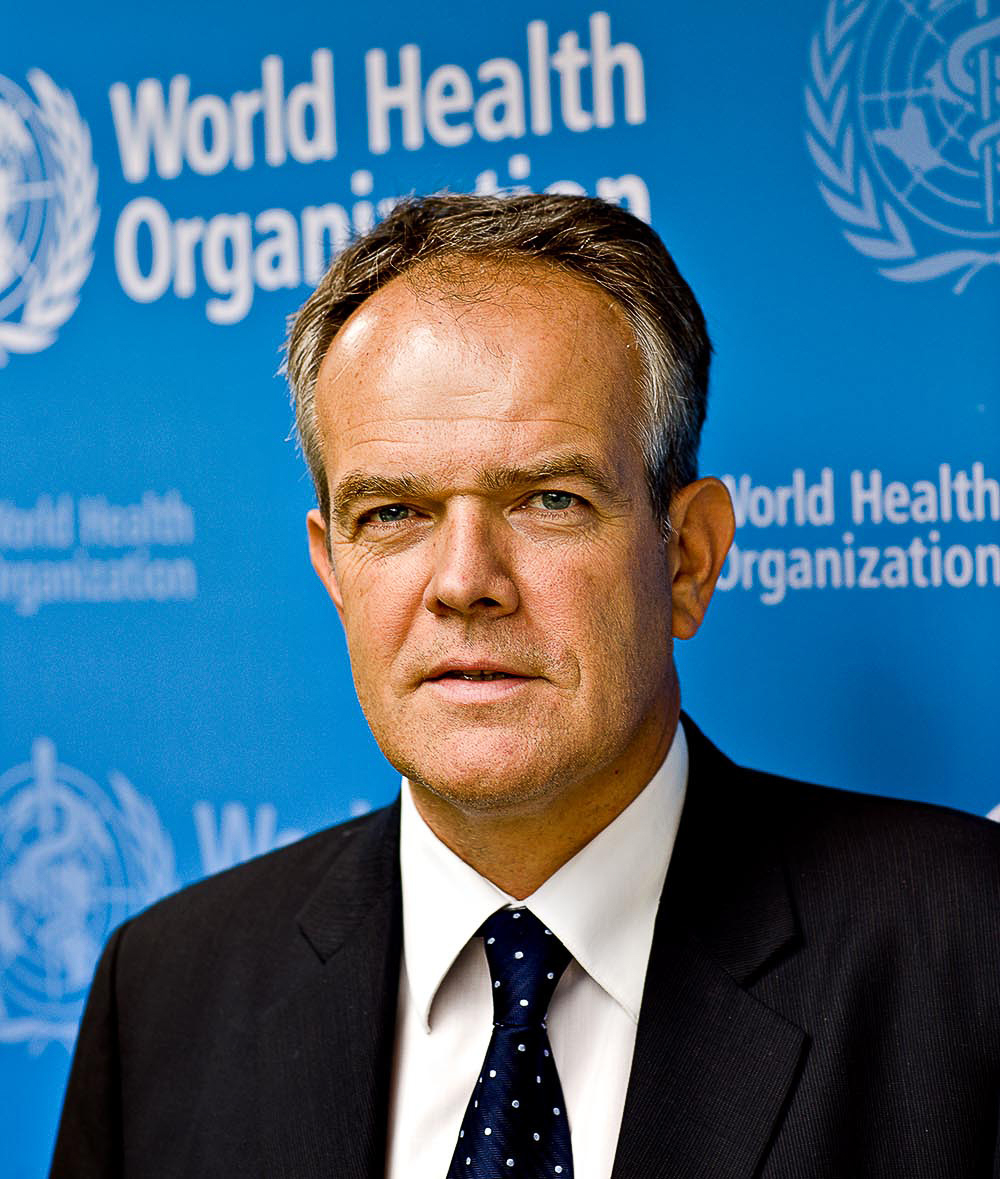
Dr Etienne Krug
Director of the Department of Health Determinants, Promotion and Prevention, World Health Organization (WHO)
“Younger people experience the most loneliness worldwide, with real consequences for their health, their learning, and their futures. Strengthening social connection is a priority for WHO. This competition gives younger people a chance to share what connection means to them, and I very much look forward to reading their letters. Writing to a friend is itself an act of connection. At a time when we are still learning how to protect and strengthen the bonds between people in an increasingly digital world, the perspectives of young people matter enormously – and we want to hear from you.”
Dr Etienne Krug is a global public health leader, with nearly 35 years of international experience. Having served the WHO in various capacities since 1999, he is currently Director of the WHO Department of Health Determinants, Promotion and Prevention at its headquarters in Geneva, Switzerland.
The Department covers a broad range of topics linked to promoting more healthy and equitable societies. Among them include social and commercial determinants of health; injury and violence prevention; noncommunicable disease risks – tobacco, alcohol and physical inactivity; urban health; social connection; health promotion; and good governance and fiscal policies for health. In this capacity, he oversees the development of intergovernmental resolutions and global reports, the implementation of multi-country development projects, and global advocacy campaigns.
He chairs the International Organizing Committee for the series of World Conferences on Injury Prevention and the United Nations Road Safety Collaboration. He is also member of the Editorial Board of several scientific journals.
Before joining WHO, Dr Krug worked at the United States Centers for Disease Control and Prevention; Médecins sans Frontières, and the United Nations High Commissioner for Refugees. Dr Krug holds a Master’s Degree in Public Health from Harvard University in the United States and a degree as a Medical Doctor from the University of Louvain in Belgium. Dr Krug also holds a Honoris Causa Doctorate from the University of Ottawa, Canada.
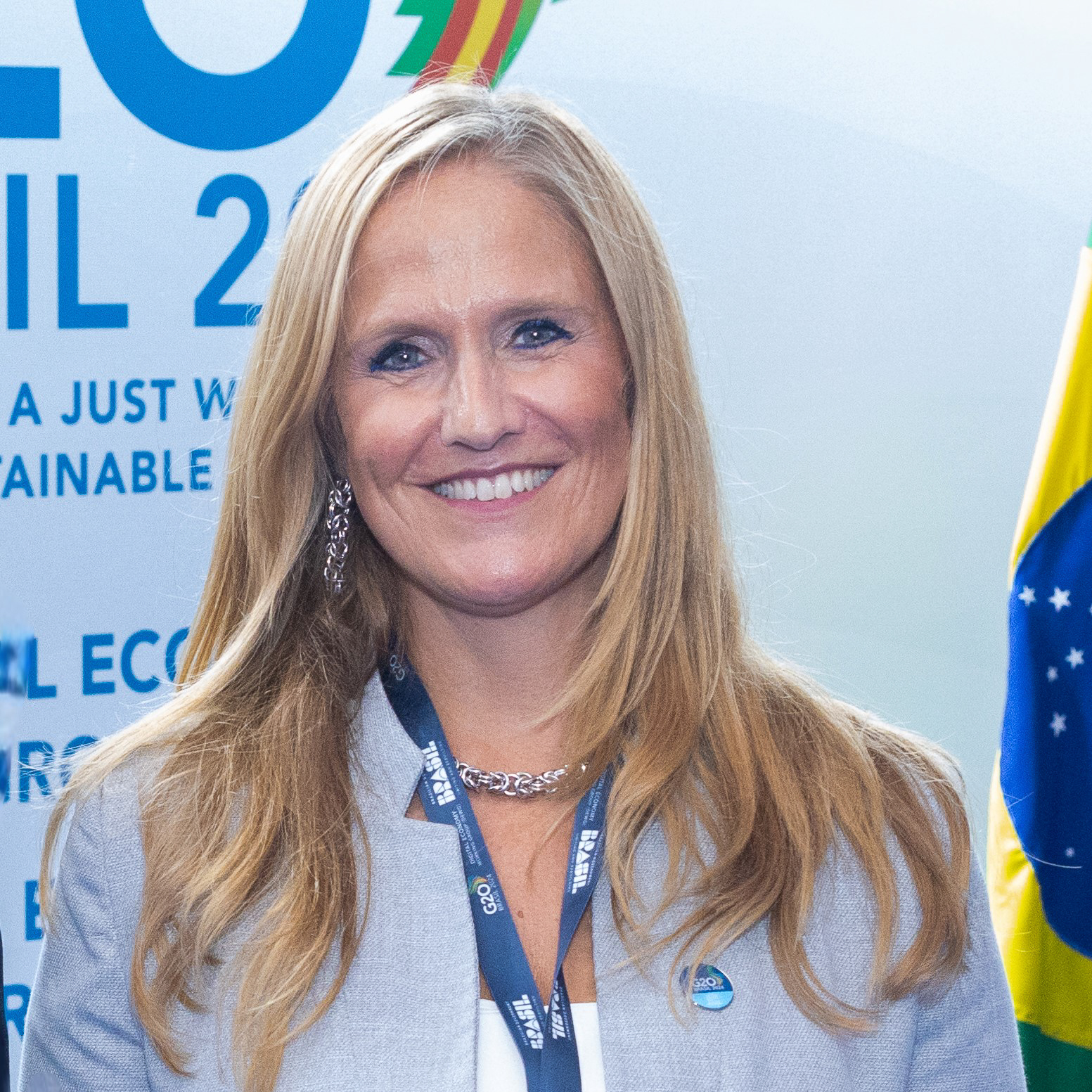
Dr Mariagrazia Squicciarini
Chief Researcher and Analyst, UNESCO Sciences Sector
Dr Mariagrazia Squicciarini is Chief Researcher and Analyst, UNESCO Sciences Sector, where she supports the Assistant Director General and helps the Sector deliver on its mandate. She has been further acting as SHS’ focal point for the G7 and G20 and leads research and policy relevant work related to science and new technologies - in particular, Artificial Intelligence and neurotechnology -, inclusion, antiracism and gender, among others. In this capacity, she contributes to advancing human-centred approaches to the digital transformation, and the impact of AI technologies on economic and societal dynamics - both welfare- and well-being-related -, with particular attention devoted to youth.
In the past, she has led and contributed policy relevant analysis related to the changing determinants of growth and productivity, the economics of Intellectual Property Rights; knowledge-based capital; global value chains; Artificial Intelligence; job and skill dynamics and the digital transformation; and the gender divide.
Mariagrazia holds a Ph.D. in Economics from the University of Essex (UK) and before joining UNESCO, she worked at the OECD, the Technical Research Centre of Finland (VTT), the European Commission Joint Research Centre and several other leading academic and research institutions. She has published extensively and has been acting as a reviewer for international peer review journals and governments.

Diana Chao
Founder of Letters to Strangers
“Connection takes on many forms, but one of the most precious is the pure, messy, heartfelt letter that we write to a friend. At a time when it's easy to cast blame on what's wrong with the world, it takes tremendous bravery, resilience, and humanity to believe in each other. Words are the first step to capturing – and immortalizing – that hope.”
Diana Chao is a Buyi Chinese-American mental health activist and interdisciplinary artist. At 14, after bipolar disorder and a blinding eye condition nearly ended her life, she began healing through letters and founded Letters to Strangers (L2S), today the largest global youth mental health NGO, directly impacting over 660,000 people across 72 countries. L2S published the world's first youth-for-youth mental health guidebook, taught to 150,000+ students, and operates the first toll-free 24/7 pan-African mental health hotline out of Liberia.
The first in her family to receive higher education, Diana became the youngest researcher at NASA's Jet Propulsion Laboratory at 17 and joined the UN Intergovernmental Panel on Climate Change at 20. She graduated with honours from Princeton on a full scholarship and completed her MBA at the University of Oxford as a Skoll Scholar.

Moussibahou Mazou
Former Deputy Director General of the UPU International Bureau
"In the mid-19th century, when Morse invented the electric telegraph, people predicted the death of the letter. Nearly two hundred years later, this form of physical communication continues to be widely used. If it has endured through time in the digital age, it is because it is not merely another tool for exchange.
A letter carries both joyful and difficult moments; above all, it allows us to express our deepest feelings to a correspondent, whether a family member or a friend. It is not an impersonal form of communication, written in haste. Rather, it reflects the depth of human relationships.
If, in today's digital age, so many young people continue to show an interest in letter writing, it is something to be celebrated."
Moussibahou Mazou is an eminent figure in the international postal sector, with several decades of experience within the United Nations system.
In the course of his international career, Mr Mazou held several positions within the Universal Postal Union, the United Nations specialized agency for postal services, before being elected Deputy Director General at the 21st Universal Postal Congress in Seoul in September 1994. He was re-elected for a second term at the 22nd Congress in Beijing in 1999. As Deputy Director General, he played a decisive role in the development and modernization of postal services on a global scale.
Since the end of his duties at the UPU, Mr Mazou has served as a lecturer and expert with several academic institutions in France and Switzerland, and is the founder of the Forum for Research and Development of Postal Services in Africa (FRDPA). He has also conducted expert missions for the African Union on the harmonization of postal policies on the continent.
A prolific author, Mr Mazou has published reference works on the postal sector, including The Universal Postal Union, Past, Present and Future (2004), as well as several novels.
Learn more about past competition winners here.
For any questions about the International Letter-Writing Competition for Young People, please contact the UPU team at Communication[@]upu.int.