One world. One postal network.
The Universal Postal Union is a United Nations specialized agency and the postal sector's primary forum for international cooperation.
The Universal Postal Union is a United Nations specialized agency and the postal sector's primary forum for international cooperation.








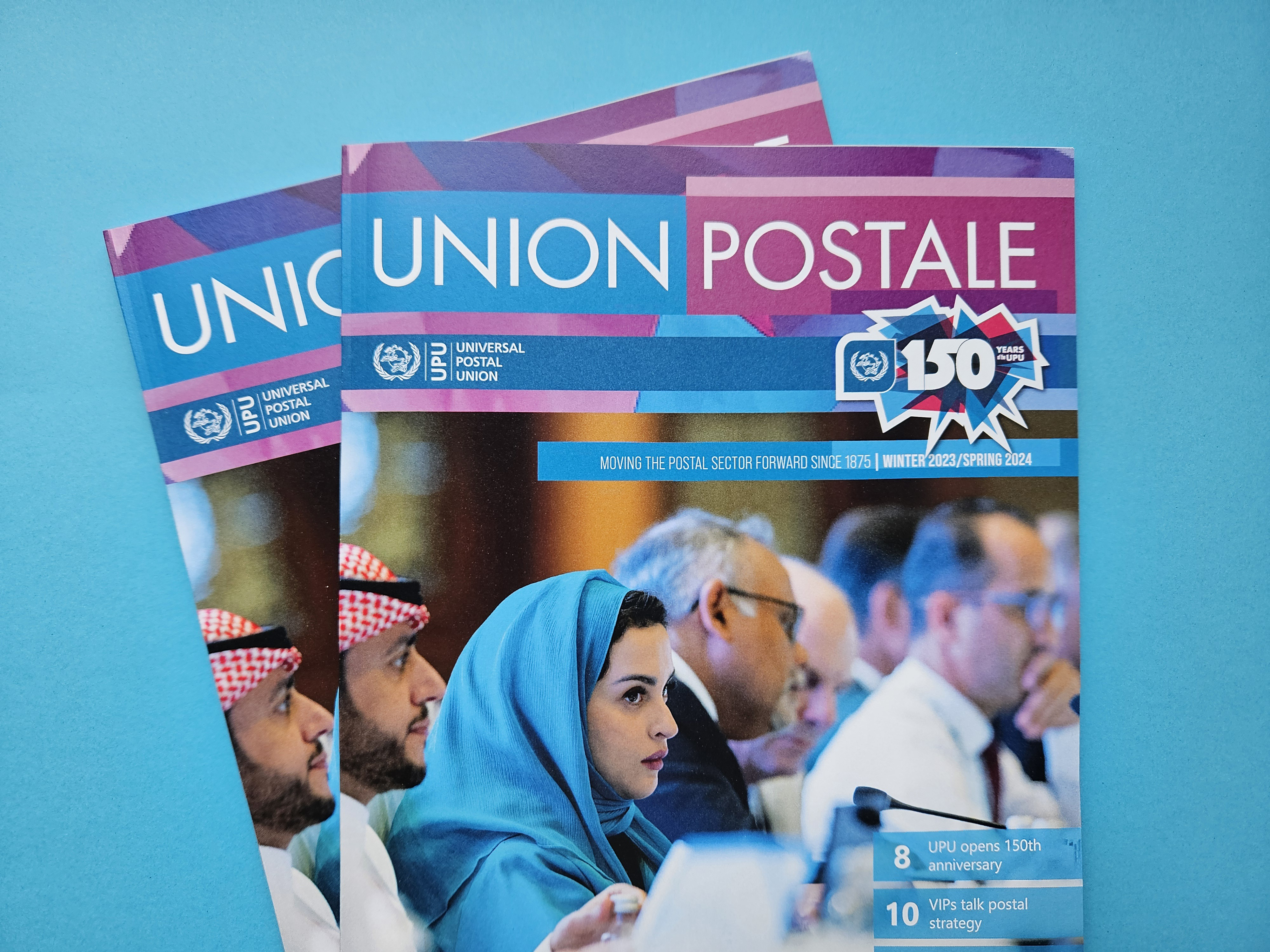
Union Postale Winter 2023/Spring 2024
19.03.2024 — In this issue of Union Postale, we celebrate the UPU’s important role in shaping the past, present and future of postal services.
Postal Statistics 2022
15.12.2023 — Postal Statistics presents data collected annually by the International Bureau from member designated postal operators of the Universal Postal Union.



Can’t find what you are looking for?
You might want to check the parcel tracker of your national post. You can find the website of your national post in our list of member countries.