In today’s rapidly evolving trade environment, operational readiness is no longer a technical back-office concern. For postal operators navigating surging cross-border e-commerce, increasingly complex regulations and ever-higher customer expectations, the ability to deliver efficiently, reliably and transparently is essential to remaining competitive.
Over the past decade, digitalization has enabled micro, small and medium-sized enterprises (MSMEs) to reach customers across borders, while customs procedures have become more data-driven and security requirements more stringent. Consumers now expect faster delivery, real-time tracking and seamless returns. In this environment, operational readiness – the ability of postal networks to comply with international standards while ensuring smooth end-to-end delivery – has become essential for participating in global e‑commerce.The UPU’s operational readiness for e-commerce (ORE) programme has helped designated operators adapt to these changes. Through ORE 3, implemented during the 2022–2025 Abidjan cycle, operators improved delivery performance, accelerated customs clearance and strengthened compliance with electronic advance data (EAD) requirements. These achievements demonstrated that targeted operational improvements can deliver measurable impact.
One lesson has emerged consistently from missions carried out across Africa, the Caribbean, Eastern Europe and the Asia-Pacific region: the challenge rarely lies in strategy alone, but, more often, in translating strategic objectives into day-to-day operational execution.
Many designated operators have clear ambitions aligned with the UPU’s Integrated Product Plan, including improving delivery performance, strengthening customer experience and capturing a greater share of cross‑border e‑commerce. However, these objectives are not always supported by standardized operational procedures, measurable key performance indicators or clearly defined workflows.
This gap becomes evident during operational assessments. For some operators, e‑commerce items are still processed alongside traditional letter mail, creating avoidable delays. For others, the primary bottleneck is digital rather than physical. Poor-quality EAD, particularly ITMATT messages, prevents customs authorities from carrying out risk-based pre-arrival processing, resulting in longer clearance times and reduced visibility across the delivery chain.
Over the course of my missions, I have heard a simple recurring message. Postal operators want to improve service quality and expand their e‑commerce business, but they often lack the operational visibility and control needed to achieve those goals. This is precisely where the ORE+ project – operational readiness and expanded capabilities for global e‑commerce and trade (2026–2029) – comes in.
Building on the achievements of ORE 3, ORE+ moves beyond compliance towards continuous improvement and competitiveness. Its objective is not only to help operators meet international standards, but also to strengthen their ability to compete in an increasingly digital and interconnected marketplace.
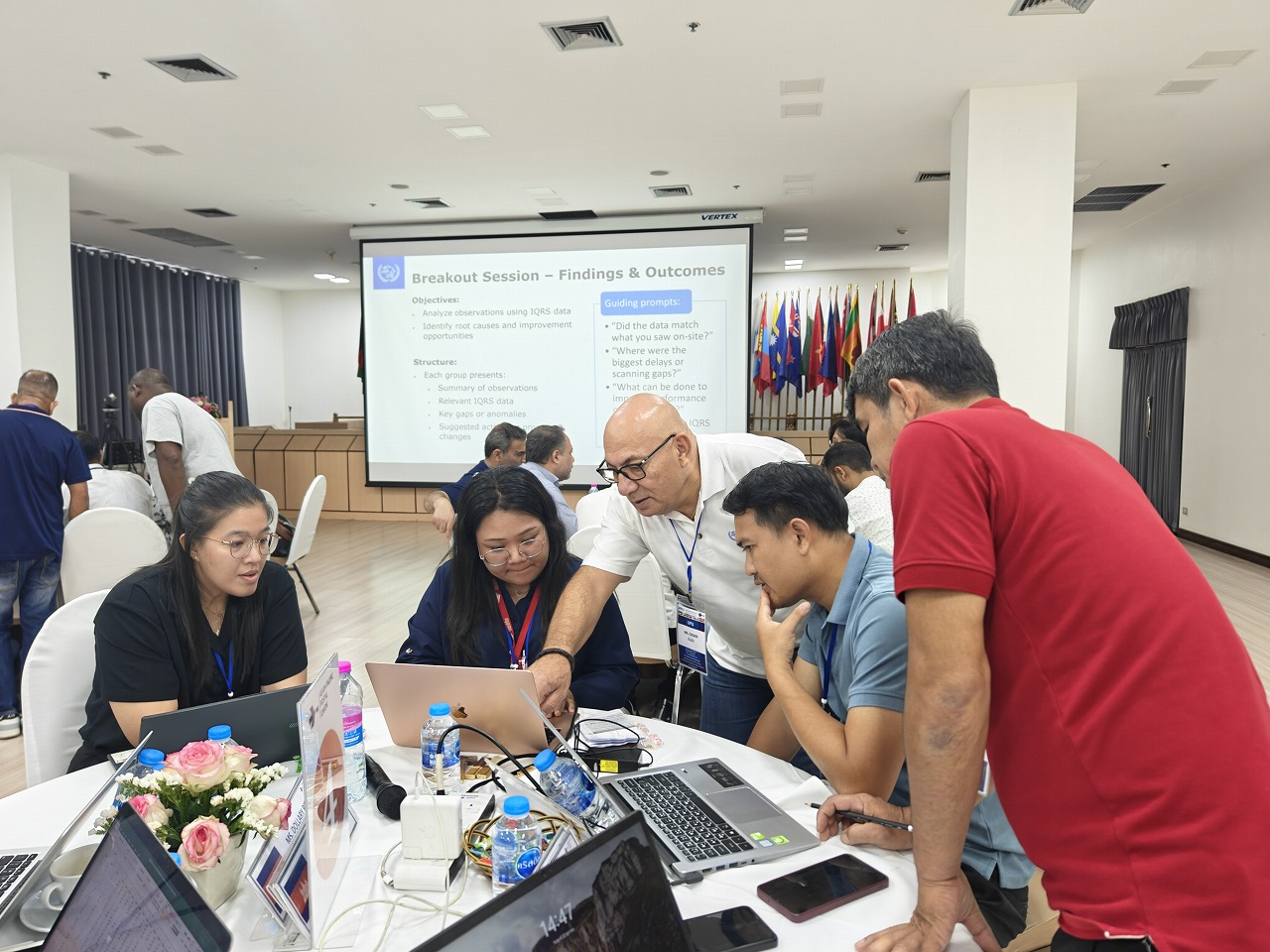
In our missions, we begin by mapping end-to-end operational flows and assessing compliance with UPU standards across the postal chain. These diagnostics often reveal bottlenecks that are not immediately visible to operators themselves. Through workshops, training sessions and technical assistance, we then work with local teams to translate findings into practical improvements, from strengthening scan compliance and data quality to redesigning operational processes. Twinning activities further accelerate progress by allowing operators to learn directly from peers that have successfully overcome similar challenges.
What makes these interventions effective is their practical nature. Rather than relying on large-scale transformation projects, many improvements stem from relatively simple operational changes. Some operators have reduced processing times by reorganizing mail flows and separating priority and non-priority products. Others have improved tracking visibility through reinforced scanning discipline and simplified procedures. Better-quality electronic data has enabled closer customs cooperation and more efficient pre-arrival processing.
One lesson that I have consistently observed through ORE missions is that operational improvements are not an end in themselves. When postal operators reinforce tracking visibility, improve data quality and streamline customs processes, they become more reliable partners for customers, merchants, e‑commerce platforms and transport providers. Better operational performance ultimately creates opportunities for businesses and communities that depend on the postal network to participate in international trade.
This is why ORE+ is closely linked to broader development objectives. Through initiatives such as the UPU’s TradePost and Heya (Post4Women) programmes, improved operational capabilities can translate into greater opportunities for MSMEs, women entrepreneurs and underserved communities. By strengthening postal networks, operators become more effective enablers of trade and inclusion, helping businesses to access international markets through reliable and affordable logistics services.
Based on my experience working with operators across different regions, competitiveness will increasingly depend on a combination of digital, operational and commercial capabilities. End-to-end visibility, high-quality EAD, key performance indicator-driven management, process standardization and stronger customs integration are becoming fundamental requirements.
Ultimately, technology and infrastructure alone will not determine success. The operators making the greatest progress are those that consistently translate strategic objectives into measurable operational performance. Operational discipline, digital integration and a commitment to continuous improvement are what transform readiness into competitiveness.
Operational readiness, therefore, is not simply about being prepared. It is about being competitive. Through ORE+, the UPU is helping its member countries to transform operational capability into sustainable participation in the global digital economy.
Chokri Ellili
UPU Physical Services Implementation and Capacity Building Programme Manager