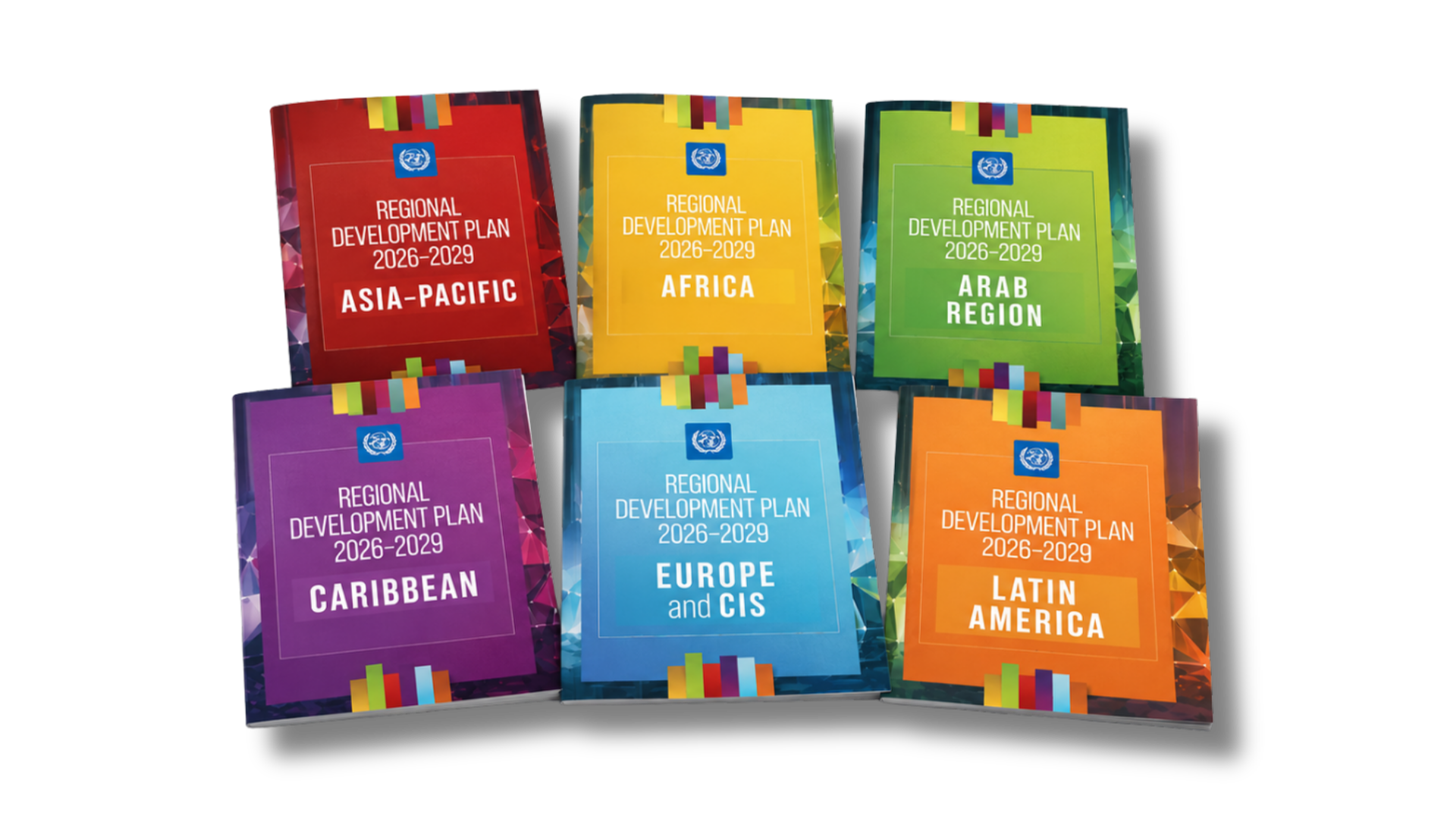
The UPU is setting in motion new, four-year regional development plans during the Spring meetings of its Council of Administration (CA) this week.
The regional development plans (RDPs) analyze the situation of each UPU developing region to contextualize actions under the Dubai Strategy in line with each region’s unique needs.The individual plans account for priorities identified by postal leaders, authorities and development partners in each region, defining actions at country-level. Successful outcomes will rely on strengthened relations with regional postal unions, international organizations and the various postal sector stakeholders in each region, in addition to reinforced in-region support from the UPU’s 15 field offices worldwide.
Under the framework, priority will be given in support of least developed countries (LDCs), land-locked developing countries (LLDCs) and small island developing states (SIDS), who will benefit from national-level projects.
Africa
In Africa, which accounts for the largest number of LDCs, with at 28 countries in this category, the sector is mainly grappling with declining traditional mail volumes, limited investment, and the imperative to accelerate digital transformation.
The Africa Regional Development Plan 2026-2029 focuses technical assistance on modernizing postal infrastructure, advancing digital transformation, supporting regulatory reform and promoting postal networks as enablers of social inclusion. Securing commitment and investments from the highest decision-makers, alongside effective resource mobilization with strategic partners, will be key success factors for the plan, with the active involvement of other stakeholders, including regional unions, postal training centres and UN system partners.
“The objective is simple and concrete – better services, more economic opportunities, stronger e-commerce and, above all, postal networks that truly serve people everywhere,” explained Amadou Amadou, UPU Coordinator for the Africa region, LDCs, SIDS, and LLDCs.
Arab region
Like other regions, the Arab postal sector is working to mitigate declines in traditional mail and increased competition from new players in the relatively small regional market. The region also faces intraregional modernization gaps that must be closed for the network to advance.
“The regional development plan aims to modernize the infrastructure of postal operators, enable them to provide modern and diversified services that meet customer needs and also to prepare the regulatory environment by supporting decision-makers – especially regulators – in updating the regulatory framework for postal services in the Arab region,” explained Hashim Elhaj, UPU Arab Region and Emergencies and Postal Resilience Coordinator.
In the Arab region, five LDCs will receive focused support under the Arab Regional Development Plan 2026-2029. The plan also accounts for the special situation of several countries impacted by conflict or political instability that require additional technical assistance, including the potential deployment of UPU emergency support mechanisms to ensure business continuity.
Asia-Pacific
In the Asia-Pacific region, working to mitigate declining revenues, the Asia-Pacific Regional Development Plan 2026-2029 aims to modernize e-commerce infrastructure, focusing on service quality and operational performance. It also leverages the Post’s existing role as a provider of government, financial and sustainability services to accelerate diversification efforts through its network. Training initiatives will be organized in conjunction with regional stakeholders. The regions 19 LDCs, LLDCs and SIDS will be prioritized for national projects.
“In Asia Pacific, post offices provide services for the entire society. The big courier companies and other private operators serve only profitable segments mainly in the city centers, while the post offices are present everywhere in the far-flung areas, helping society at large,” said Subhash Sinha, UPU Coordinator for Asia-Pacific and South-South Cooperation.
“Our focus is to help the post fulfill its social obligation as well as remain commercially viable,” he added.
Caribbean
With 14 SIDS in the region, the Caribbean Regional Development Plan 2026-2029 takes a special focus on disaster preparedness, while noting the need to build capacity to navigate particular e-commerce challenges faced by these countries that face unique social, economic and environmental vulnerabilities. Digitization and diversification are also prioritized under the plan.
In partnership with the Caribbean Postal Union (CPU), the UPU will work to attract funding sources for training towards business continuity planning, quality of service, marketing and cost accounting.
“Our region is defined by its resilience, innovation and talent,” explained Pooran Parampath, UPU Caribbean and Capacity Development Expert, who added, “Applying lessons learned, we will deliver regionalized, hands-on capacity building, strengthen coordination and expand shared regional solutions.”
Europe and CIS
The Europe and CIS Regional Development Plan 2026-2029 aims to help countries navigate letter post losses, pressures on delivering universal service obligations, and increased market liberalization, in addition to upcoming major regulatory changes establishing more robust customs clearance and sustainability requirements.
With this in mind, the RDP for Europe and CIS focuses on improving operations, promoting innovation and digitalization, supporting regulatory reform, and advancing cooperation with regional stakeholders.
“Thanks to this open, transparent and fluid communication with our internal and external stakeholders, the Europe and CIS Programme has a Regional Development Plan for 2026-2029 that is consistent with the challenges and opportunities identified,” said Mario Gonzalez-Montiel, UPU Programme Manager, Europe and CIS.
“The RDP is based on a Greek-temple structure with three main pillars: supply chain, involving operations and logistics, innovation, and digitalization, with specific and cross-cutting topics to develop involving postal operators, regulators and ministries.”
Latin America
For the Latin American postal network, it will be critical to close gaps in infrastructure, connectivity, digital capacity, and institutional alignment that are limiting its ability to take full advantage of the opportunity to become a logistics partner fully supporting government objectives.
Although the region faces unique geographic challenges, it counts only two SIDS and two LLDCs among its members, resulting in lower prioritization for external funding. Bearing this in mind, the Latin America Regional Development Plan 2026-2029 will see the UPU collaborate with the Postal Union of the Americas, Spain and Portugal (PUASP) to drive resource mobilization, promote digitalization and innovation, expand financial and social services, support regulatory modernization and enhance disaster preparedness.
“Overall, the idea is to promote digital transformation and inclusion so that postal operators can support public policies, facilitate trade and better serve people,” said Nicolas Bilhoto, UPU Regional Coordinator for Latin America and the Caribbean.
Hear more from those responsible for overseeing the implementation of the UPU’s regional development plans.