CC Members’ Day highlights new partnerships and practical solutions for the postal sector during the second session of the UPU Dubai cycle
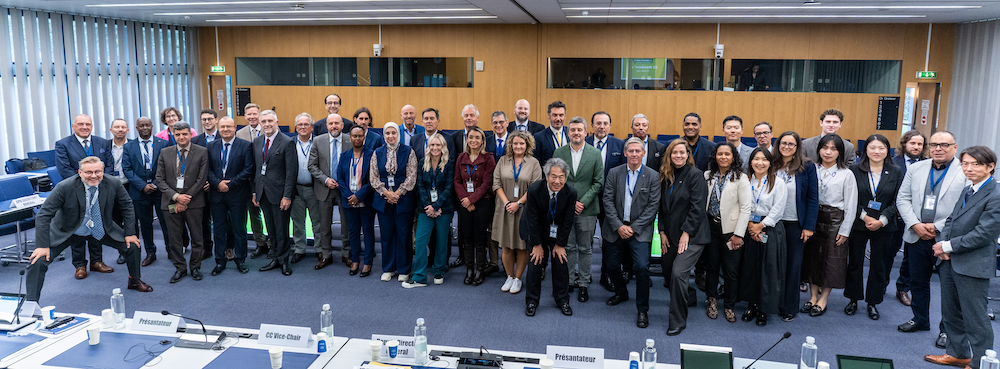
At its Members’ Day, held alongside the autumn sessions of the UPU’s Postal Operations Council (POC) and Council of Administration (CA)the UPU Consultative Committee explored how closer collaboration between the UPU, postal operators and private-sector experts can support better decision-making, modernize delivery, strengthen regional development and connect innovative technologies to the global postal network.
The day opened with a question for CC members: if you had to describe the value you get from the CC in one word, what would it be? The poll set the tone for a day that combined presentations on emerging UPU initiatives with discussion about the CC’s role, visibility and future direction. Across six sessions, UPU directorates and CC members highlighted opportunities to contribute expertise, build partnerships and help shape the future of postal services.
Turning shared expertise into practical solutions
The morning programme brought together members and UPU experts to discuss how CC members could make a practical difference.
Dr. José Ansón, Lead Economist at the UPU Knowledge Centre and Think Tank, from the Policy, Regulation and Markets Directorate, presented the concept behind the Decision Kernel and its Decision Desk demonstrator. The approach aims to help postal operators bring together fragmented data, knowledge and expertise to assess strategic challenges, explore options and make better-informed decisions. It also points to a potential role for CC members as “Super Solvers”, able to present solutions in response to operators’ needs, while leaving the final decision with the operator.
The Postal Operations Directorate turned to the challenges of the last mile, outlining work on delivery strategies, parcel locker certification, customer engagement and emerging technologies such as drones. A new Last Mile Delivery Expert Team will provide a forum for sharing knowledge, identifying needs and exploring potential solutions and pilot projects. The discussion highlighted opportunities for CC members to contribute technical expertise, help shape requirements and participate in relevant initiatives.
The Development and Cooperation Directorate presented the UPU’s regional development plans for 2026–2029, covering six regions. Priorities include capacity-building, digitalization, service diversification, operational efficiency, e-commerce, cybersecurity and sustainable postal services. CC members can contribute through technical advice, training, feasibility studies, demonstrations and equipment support, with cooperation shaped by the needs and priorities of individual countries and regions.
The importance of making these contributions visible was also emphasized. As Mutua Muthusi, Director of UPU Development and Cooperation Directorate (DCDEV), put it, the CC has been able to “empower our members in the regions” by bringing in expertise, sharing experience and helping postal operators understand what is available in the market to strengthen their businesses.

We've been able to empower our members in the regions through bringing to them expertise where they can share experiences and maybe be able to have an idea of what is in the market, what they can make use of, to empower their business much better.
Mutua Muthusi, Director, Development and Cooperation Directorate (DCDEV)
The Postal Technology Centre Directorate then explored how the UPU’s technology platform can connect postal operators with private-sector providers and wider postal-sector participants. Initiatives spanning customs and duty-paid services, hybrid postal networks, dangerous-goods screening, transport information and address verification demonstrate how APIs, certification and interoperability can help solutions work across the global postal network. The presentation also covered work to strengthen cybersecurity and information-sharing across the sector.
The morning sessions illustrated the range of ways in which CC members can contribute, including helping operators assess challenges, modernizing delivery, supporting regional development and connecting technologies and services across borders.
From market expertise to skills development
The afternoon brought the focus back to the experience and contribution of CC members.
Viktor Kovačič, Managing Director Federation of European Producers of Envelopes and Light Packaging (FEPE), and Dr. Oliver Kaliski, from the Austria Post explored the continuing role of physical mail and paper-based communication alongside digital channels. The presentations highlighted direct mail and advertising solutions, the value of tangible and targeted communication, and the importance of preserving consumer choice as services increasingly move online. Examples of commercial partnerships demonstrated how postal services can support organizations’ communications and marketing needs.

The final session, led by Daniela Cabanilla, CEO of Miami Business Technology University (MBTU), with a regional perspective from the Caribbean Postal Union by Samuel M. Brangman Jr., Secretary General of the CPU, focused on professional education as a driver of economic development in the postal sector. As operators respond to declining letter volumes, growing e-commerce demand, digital disruption and increasing security requirements, workforce skills and organizational learning are becoming central to their ability to adapt.
The discussion emphasized the importance of training that delivers measurable results, such as developing competencies, supporting their application in the workplace and improving organizational performance. Regional initiatives in the Caribbean illustrated how education, partnerships and knowledge-sharing can help strengthen postal operators’ resilience and prepare them for a changing market.
Members’ Day was also an opportunity to reflect on the CC’s future direction, with members’ perspectives helping inform how the Committee communicates its value and contribution. The day also brought members together at the CC business lunch and evening reception, alongside opportunities to connect with Designated Operators. The programme concluded with an evening reception, providing an opportunity for members and participants to continue conversations and strengthen connections beyond the formal sessions. At the evening reception, UPU Director General thanked the CC and its Secretariat for organizing the programme and acknowledged members’ contributions throughout the week.
“The discussions and connections made today are an important part of strengthening cooperation across the wider postal sector,” Masahiko Metoki, UPU Director General, said.
From decision-making and last-mile delivery to regional development, technology, physical mail and professional education, CC Members’ Day demonstrated the breadth of expertise represented across the CC.